


You know what’s funny? in my eleven years of interviewing developers and logistics managers across north america, i’ve heard the same refrain: “we need the facility yesterday.” with the current surge in nearshoring—the practice of transferring business operations to a nearby country to reduce supply chain friction—demand for industrial space along the u.s.-mexico border has reached 3PL warehouse services Mexico a fever pitch. From Monterrey to Tijuana, industrial corridors are expanding rapidly. However, in the rush to secure land and break ground, developers often overlook the cold, hard reality of structural integrity.
There is a persistent myth that prefabricated steel buildings are “cookie-cutter” structures ill-equipped for extreme environments. Let’s set the record straight: when engineered correctly, these facilities aren’t just durable—they are often superior to traditional tilt-up concrete in specific high-risk zones.
The Nearshoring Engine: Why Mexico’s Industrial Corridors are Booming
Nearshoring is no longer a boardroom buzzword; it is a structural shift in global logistics. Companies are moving manufacturing out of Asia and into Northern Mexico to slash shipping times and hedge against geopolitical volatility. This influx of capital has put immense pressure on developers to deliver high-quality, code-compliant space in record time.

However, when I hear developers claim they can deliver a “fast” build, my ears perk up. “Fast” is an opinion. A permit approval timeline is a fact. Pretty simple.. In seismic zones or hurricane-prone coastal regions, you cannot trade speed for safety. Ignoring local permitting or utility infrastructure—specifically the load capacity of the electrical grid or water throughput—is the quickest way to turn a lucrative project into a stranded asset.
Understanding Structural Integrity: Seismic Design and Wind Loads
If you are building in an industrial park in Baja California or coastal Texas, you aren’t just building a box; you are building an engineering system.
Seismic Design Steel
Seismic design steel refers to a structural engineering approach that accounts for the lateral forces exerted by earthquakes. Unlike rigid structures that crack under the shifting energy of a seismic event, prefabricated steel frames utilize moment-resisting connections. These allow the frame to flex, absorbing the energy and dissipating it without total failure. In high-seismic zones, the key is ductility—the ability of a material to deform under stress without snapping.
Wind Load Warehouse Requirements
A wind load warehouse is engineered to withstand specific pressure differentials (uplift and lateral force) generated by high-velocity wind events. Prefabricated steel buildings offer a distinct advantage here: because the primary and secondary framing members are calculated using advanced 3D modeling software, engineers can calibrate the exact thickness of steel (gauge) and the frequency of fasteners to meet local ASCE (American Society of Civil Engineers) standards.
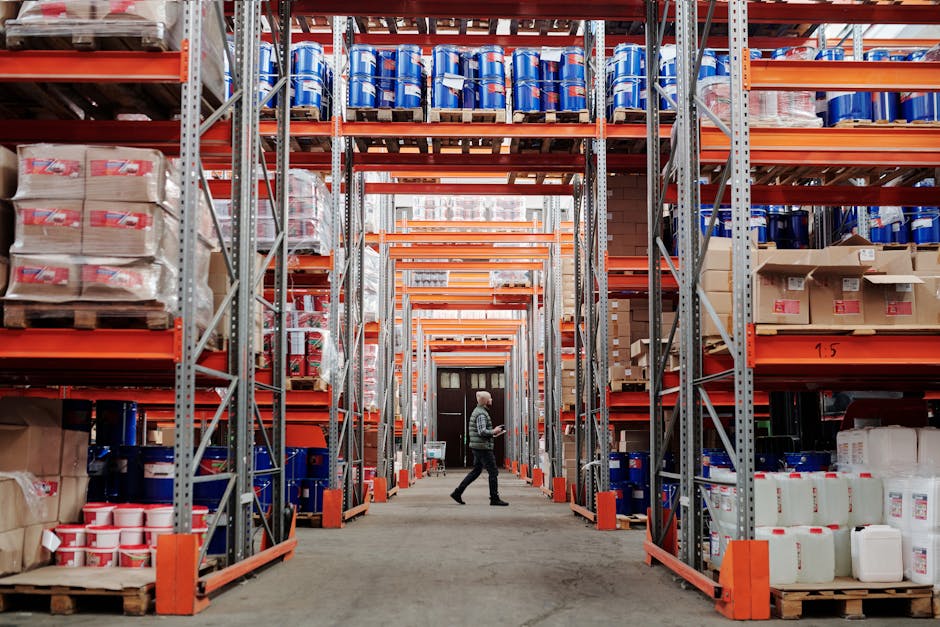
Why Prefabricated Steel is the Default Choice for Scalable Logistics
Speed-to-market is the primary driver for pre-engineered steel. In an era where “time is money,” the ability to manufacture components off-site while the foundation is being poured represents a significant efficiency gain.
Scalability is where these buildings truly shine. If a logistics firm needs to add 50,000 square feet next year, a steel building allows for the removal of an end wall and the seamless attachment of additional bays. Trying to perform this level of expansion with traditional heavy masonry or tilt-up concrete is a structural nightmare that usually involves compromising the building’s envelope.
Avoiding the “Buzzword Trap” in Site Selection
I’ve seen too many site selectors get distracted by shiny brochures. When a supplier tells you their building is “hurricane-proof,” walk away. No building is proof against anything. What you need to ask for is the Mean Recurrence Interval (MRI)—the statistical likelihood of a storm event occurring—that the building is designed to survive.
Plus, do not ignore the utilities. A state-of-the-art steel warehouse is useless if the local grid cannot handle your automated picking systems or cold-storage refrigeration. Always verify the utility load capacity before you sign the contract for the steel package.
Developer’s Checklist: Ensuring Your Facility Holds Up
Before you commit to a build-to-suit project or a speculative industrial warehouse, run through this checklist with your lead engineer:
- Site-Specific Geotech Report: Has a local engineer verified the soil bearing capacity? Steel frames are lighter than concrete, but the foundation is the anchor point.
- Code Compliance Verification: Are the structural drawings stamped by a professional engineer (PE) licensed in the specific state or region where the project is located?
- Wind/Seismic Load Calculations: Request the specific “Design Criteria” sheet for your building, showing exactly what wind speed (mph) and seismic category (e.g., Seismic Design Category D) the structure is engineered to withstand.
- Connection Detailing: Ask how the primary frames are bolted. Welded vs. bolted connections react differently under seismic stress; ensure yours is appropriate for your risk zone.
- Permitting Path: Have you accounted for the time required to submit structural calculations to local municipal authorities? This usually takes 3-6 months. Do not accept a project timeline that ignores this phase.
- Utility Load Audit: Does the current industrial corridor infrastructure support your power, fire suppression (sprinkler), and fiber optic needs?
The Bottom Line
Prefabricated steel buildings are a robust, scalable solution for the modern supply chain. They are not merely “fast”—when handled by competent engineers and vetted by diligent owners, they are precision-engineered machines capable of standing up to the harshest environmental conditions in the world. Skip the buzzwords, demand the engineering data, and ensure your site selection accounts for more than just proximity to the border. The structure you build today will define your operational resilience for the next thirty years.
